Tuesday, February 28, 2012

Module 7 Frindle

Summary: Nick is entereing the 5th grade and he is getting to know his teachers.  Most teachers have already heard about Nick and his antics and are ready for him, especially Mrs. Granger. Nick tries to come up with a plan to distract Mrs. Granger from handing out homework and instead is given an extra dictionary assignment.  Nick, knowing his teacher's has a love for words and dictionaries, comes up with a plan to invent his own word for pen.  Frindle quickly catches on and it begins to annoy Mrs. Granger.

Clements, A. (2003). Frindle. New York, NY: Scholastic.

My Impressions:  I read this book with my son and we really enjoyed this upbeat fun story.  Nick comes across smart, funny, and charasmatic; reminds me of what I think my son will act like when he gets older.  When my own son is going around calling our pens frindles, I know that the book has left an impression.

Professional Review:
The author has created a fresh, imaginative plot that will have readers smiling all the way through, if not laughing out loud. Nick, a champion time-waster, faces the challenge of his life when confronted with the toughest teacher in school, Mrs. Granger. Always counted on to filibuster the impending test or homework assignment away, Nick has met his match in “Dangerous Grangerous,” who can spot a legitimate question in a second and has no patience with the rest. In answer to “Like, who says that d-o-g means the thing that goes ‘woof’ and wags its tail? Who says so?” she replies, “You do, Nicholas. You and me and everyone in this class and this school and this town and this state and this country.” And thus is born frindle, Nick’s new name for pen, promising and delivering a classic student-teacher battle along the lines of — but far funnier than — Avi’s Nothing But the Truth (Orchard). The battle assumes the proportions of a tall tale, and although outrageous and hilarious, it’s all plausible, and every bit works from the premise to the conclusion. The brisk narration is rapid-fire, and Nick is one of the most charming troublemakers since Soup. The merchandising future of this one is too terrible to contemplate; the cutting-edge gift this Christmas has got to be a frindle.

[Review of the book Frindle by A. Clements]. (1996). Horn Book Magazine, 72(6), 732-733. doi: 9704171561

Library Uses: This would be a good way to teach students the origins of words.  Also, it could be used to teach how words are added to the dictionary and have students try to come up with their own new words.

Monday, February 20, 2012

Module 6 The Very Hungry Caterpillar

Cover image for The very hungry caterpillar

Summary: The story follows a very hungry caterpillar who eats his way through different types of foods on different days of the week.  He initially eats fruits, but eventually eats all sorts of junk food that end up causing him a stomach ache.  He finally finds relief by eating a green leaf.  He then makes his cocoon and in two weeks becomes a beautiful butterfly.

Carle, E. (1969). The very hungry caterpillar.  New York, NY: Philomel Books.

My Impressions:  I love all of Eric Carle books so of course this one was no exception.  I especially enjoyed the underlying message that fruits are good for you and too much junk food is bad and can lead to a tummy ache.

Professional Review:
Carle's classic tale of a voracious caterpillar who eats his way through the days of the week and then changes into a "beautiful butterfly" has been reissued in a sumptuous twenty-fifth anniversary edition with a shiny, silver-coated cover and wonderfully thick, durably pages.

[Review of the book The Very Hungry Caterpillar by Eric Carle].  (1995, March). The Horn Book Guide.  Retrieved from http://www.titlewave.com/search?SID=d4722ec91985ae5fb5d1d753256b9a0f

Library Use:  This is what I used for my storytime assignment because it lends itself to so many activities.  I read both the English and Spanish versions to help my students with their Spanish vocabulary.  As a follow up craft , I had them create a fruit salad on green paper plates that were used to make a giant caterpillar.  We discuss the importance of eating healthy and avoiding junk food.

My sons infront of  Giant Very Hungry Caterpillar created by my preschool students.

Thursday, February 16, 2012

Module 5 Goin' Someplace Special

.Summary:The story takes place in the 1950's and is about a 12 year old African American girl named Tricia that is on her way someplace special.  Along her way she encounters many issues that deal with the Jim Crow laws and segregation. At one point Tricia is so upset that she is willing to retreat back home, but her grandmothers words of encouragement guide her into finally reaching her someplace special.

McKissack, P. (2001). Goin’ someplace special. New York: Atheneum/Anne Schwartz Books.

My Impressions: I just loved that Tricia's "someplace special" ended up being the library with its sign that read "All Are Welcome." And I thought it was interesting that the author added that she was the one that encountered these issues during her childhood.

Professional Review:
In a story that will endear itself to children's librarians and, for that matter, all library lovers, 'Tricia Ann begs her grandmother to be allowed to go alone to Someplace Special.
Mama Frances acquiesces, sending her off with instructions: " ‘And no matter what, hold yo' head up and act like you b'long to somebody.' " 'Tricia Ann's special place is not revealed until the end, but on the way there, the humiliating racism she encounters on the city bus, in the park, and in a downtown hotel almost causes her to give up. " ‘Getting to Someplace Special isn't worth it,' she sobbed." When she recalls her grandmother's words: " ‘You are somebody, a human being—no better, no worse than anybody else in this world,' " she regains the determination to continue her journey, in spite of blatant segregation and harsh Jim Crow laws. " Public Library: All Are Welcome" reads the sign above the front door of Someplace Special; Mama Frances calls it "a doorway to freedom." Every plot element contributes to the theme, leaving McKissack's autobiographical work open to charges of didacticism. But no one can argue with its main themes: segregation is bad, learning and libraries are good. Pinkney's trademark watercolors teem with realistically drawn people, lush city scenes, and a spunky main character whose turquoise dress, enlivened with yellow flowers and trim, jumps out of every picture. A lengthy author's endnote fills in the background for adults on McKissack's childhood experiences with the Nashville Public Library. This library quietly integrated all of its facilities in the late 1950s, and provided her with the story's inspiration.
A natural for group sharing; leave plenty of time for the questions and discussion that are sure to follow. (Picture book. 5-9)

[Review of Goin’ Someplace Special]. (2001, September 15). Kirkus Reviews. Retrieved from http://www.kirkusreviews.com/book-reviews/childrens-books/patricia-c-mckissack/goin-someplace-special/
Library Use: This would make for a great read and displayed for Black History month.  It would also be a great book to use to talk to students about segregation during the 1950's.

Tuesday, February 14, 2012

Module 5 Los Gatos Black on Halloween

Summary: Los gatos and other monsters are having a great time at the Monsters Ball on Halloween night.  Suddenly, the party comes to a halt when some kids come knocking on the door to do their trick-or-treating.  The monsters are so scared that they decide to hide until the children leave.


Montes, M. (2006). Los gatos black on Halloween. New York, NY: Henry Holt and Company.


My Impressions: Since this bilingual story won the Pura Belpra Award in 2008, I was really looking forward to reading it and it did not disappoint.  The rhyme in the story is not only fun to read, it flows effortlessly.  The Spanish vocabulary was simple enough to interpret, but I liked that the book had a glossary to help with the translation and pronounciations of the words. My only concern were the illustrations, though they were beautiful, they seemed a little too scary for younger readers.


Prfessional Review:
From Booklist (2006):
"Montes' evocative poem deserves exceptional artwork, and Morales obliges. Her soft-edged paintings glow with the luminosity of jewels, and her witches, werewolves, and corpses are frighteningly executed. Therein lies what may be a problem for preschoolers. These fiends aren't particularly kid-friendly; they are dead-eyed, Day of the Dead folk who scare. For slightly older children, however, this spookiness is what Halloween is all about. The Spanish is neatly integrated into the text, but for those who need clarification, a glossary is appended." Ilene Cooper

[Review of Los Gatos Black on Halloween].  (2006). Booklist.  Retrieved from www.booklist.com

Library Use: This book would be a fun and easy read during Halloween time.  It would also be an engaging way to introduce a few simple Spanish vocabulary terms.

Wednesday, February 8, 2012

Module 4 The Tale of Despereaux


The tale of Despereaux : being the story of a mouse, a princess, some soup, and a spool of thread
Summary: Despereaux Tilling is a mouse born into a world which he has a difficulty time fitting into. He loves to read books instead of eating them and he is deeply in love with Princess Pea.  When she is suddenly kidnapped, he sets out in an adventure to rescue his love.


Dicamillo, K. (2003). The tale of Despereaux. Cambridge, MA: Candlewick Press.


My Impressions: A wonderful story with a great positive message.  The author does a great job of covering good versus evil, death, love, happiness and sadness in a very age appropriate manner.  I thought it was really interesting the use of language (dark and light) the author used to describe the dungeon and Despereaux.  Also, the way the the story continuously addresses the reader was a nice touch.

Professional Review:
Gr 3 Up-A charming story of unlikely heroes whose destinies entwine to bring about a joyful resolution. Foremost is Despereaux, a diminutive mouse who, as depicted in Ering's pencil drawings, is one of the most endearing of his ilk ever to appear in children's books. His mother, who is French, declares him to be "such the disappointment" at his birth and the rest of his family seems to agree that he is very odd: his ears are too big and his eyes open far too soon and they all expect him to die quickly. Of course, he doesn't. Then there is the human Princess Pea, with whom Despereaux falls deeply (one might say desperately) in love. She appreciates him despite her father's prejudice against rodents. Next is Roscuro, a rat with an uncharacteristic love of light and soup. Both these predilections get him into trouble. And finally, there is Miggery Sow, a peasant girl so dim that she believes she can become a princess. With a masterful hand, DiCamillo weaves four story lines together in a witty, suspenseful narrative that begs to be read aloud. In her authorial asides, she hearkens back to literary traditions as old as those used by Henry Fielding. In her observations of the political machinations and follies of rodent and human societies, she reminds adult readers of George Orwell. But the unpredictable twists of plot, the fanciful characterizations, and the sweetness of tone are DiCamillo's own. This expanded fairy tale is entertaining, heartening, and, above all, great fun.-Miriam Lang Budin, Chappaqua Public Library, NY Copyright 2003 Reed Business Information.

[Review of A Tale of Despereaux]. (2003, August 1). School Library Journal.  Retrieved from www.schoollibraryjournal.com

Library Use: This would make a great Read Aloud since the chapters are short and brief.  This would also make for a great compare and contrast activity since the book is different from the movie adaptation.

Tuesday, February 7, 2012

Module 4 Number the Stars

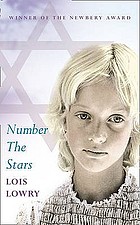
Number the starsSummary: Annemarie is a young girl living in Denmark during WWII, when the Nazis were occupying the country and were unjustly trying to get rid of all Jews.  Annemarie's best friend, Ellen, happens to be Jewish and is in danger of being "relocated" by Hitler's Nazi Party.  Annemarie's family takes a risk and decides to help Ellen and her family by keeping Ellen in their home and passing her as their daughter. 

Lowry, L. (1989). Number the stars. New York, NY: Dell Publishing.

My Impressions:  I love how this book is perfectly written for a younger audience and how the author manages to keep it both suspenseful and simple enough for young readers to understand the Holocaust.  This book gives just the right amount of exposure to what Jews went through during this extremely difficult time.  Even though it is fiction, it still provides the readers with plenty of true historical facts.  I love the bravery that Annemarie's character shows through out the story.  My favorite part is when Annemarie rips the Star of David of off Ellen's neck right before the Nazis enter their room and holds it so tight that it leaves an imprint on her hand.

Professional Review:
Gr 3-7 A moving and satisfying story of heroism in war time which is totally accessible to young readers. Annemarie’s life in occupied Copenhagen in 1943 seemingly is not much changed by the war – until the Nazi persecution of the Danish Jews begins. Annemarie’s family becomes involved in the Resistance effort helping a Jewish friend by having her pose as Annemarie’s dead sister Lise. When an important packet must be taken to the captain of one of the ships smuggling Jews to neutral Sweden, Annemarie finds the courage needed to deliver it despite grave danger in to herself. Later her Uncle Henrik tells her that brave means “not thinking about the dangers. Just thinking about what you must do.” Lowry’s story is not just of Annemarie; it is also of Denmark and the Danish people, whose Resistance was so effective in saving their Jews. Annemarie is not just a symbol, however. She is a very real child who is equally involved in playing with a new kitten and running races at school as in the dangers of the occupation. Number the Stars brings the war to a child’s level of understanding, suggesting but not detailing its horrors. It is well plotted and period and place are convincingly recreated. An afterword answers the questions that the readers will have and reiterates the inspirational idealism of the young people whose courage helped win the war.

[Review of Number the Stars, L.L. Sherman]. (1989). School Library Journal, 35(7), 177.
Library Use: This book can be utilize in numerous ways.  It would make a great introduction to the history of the Holocaust.  Teachers and librarians could used it to talk about WWII and explore the discrimination of Jews.  It could also be used to compare and contrast the lives of kids back in the 1940's and present day.

Saturday, February 4, 2012

Module 3 Noah's Ark


Image Detail
Summary: God is unhappy with how uncaring the human race has become so he decides he is going to wash away all the evil by creating a flood.  He chooses Noah as the designated person to build an ark that will protect his family and two of each animal. 

Pinkey, J. (2002). Noah's ark. New York, NY. SeaStar Books.

My Impressions: I was very pleased with how this book stayed true to the original biblical story. I was especially impressed with the beautiful watercolor paintings that earned this book a Caldecott in 2003. The illustration of the underwater view of the ark and the sharks swimming through buildings is breathtaking.

Professional Review:
Gr. 2-5. One of the best-known Old Testament stories gets a powerful traditional interpretation by an artist who seems utterly comfortable with the majesty of the tale, in terms of both meaning and visual scale. The deep rumble of a distant voice can almost be heard in the strong, straightforward text ("God was not pleased with the people of the earth. They did not care for one another. They did not care for the land that God made. And they did not care for God"), and the muscular pencil-and-watercolor art, in Pinkney's familiar style, stands up well to the telling. Scenes crowded with people and animals never seem too busy; and there's exciting drama in the rising water and the blowing winds. But the art is uneven, with a sameness to a few of the spreads, and sometimes the fascinating pencil underpinnings of the pictures are lost beneath the washes. Like the jacket art, however, there's much that is exceptional here, especially an impressive, quiet view of the ark sitting patiently as rain pounds the earth and the swirling sea begins to engulf the whole world. Definitely make room for this on the shelf.

[Review of Noah's Ark]. (2002, October 1). Booklist. Retrieved from www.booklist.com

Library Use: Since this story is of religious nature, the only library use it could serve would be as an example of illustrations that make a Caldecott winner.