Sunday, May 6, 2012

Module 15 My Earth, My But, and other Big Round Things


Summary: Virginia is the youngest sibling of three in a very smart, attractive, perfect family.  She feels like because of her size, she doesn't fit in and sometimes wonders if she was switched at birth.  She even resorts to hurting herself because of the anger she has towards herself and develops a life guide that she titles "The Fat Girls Code of Conduct."

Mackler, C. (2003). The earth, my butt, and other big round things. Cambridge: Candlewick Press.

My Impressions: When I first started reading this book, I honestly thought it was very stereotypical of how the "chubby" girl is so unhappy with herself and she has to transform herself in order to be happy.  After I finished the book and gave it more thought, I realized that the reason it felt so stereotypical is because some of today's teenage girls are having to deal with these issues of self esteem and self image, thus making this book very relatable to teens. I liked that the author let Virginia's character transform her attitude instead of her weight and finally find some happiness.

Professional Review:
"You can tell that Ani is angry, but at the same time she's also funny and strong and sassy." Though she's talking about punk folksinger Ani DiFranco, fifteen-year-old Virginia could easily be describing herself. Unfortunately, Virginia buries her anger (toward her picture-perfect but dysfunctional family) and is unable to see herself as anything but a fat girl who's kind of smart. When her brother Byron, whom she worships, is found guilty of date rape, Virginia finally begins to acknowledge what her older sister Anais has tried to tell her: that Byron and their parents are far from perfect. Virginia's transition from an insecure girl desperate for her family's approval to a confident young woman might be a little messagey, but it's believable, and she doesn't do it on her own. Support comes from her best friend, from a teacher with eating-disorder experience, from a doctor who stresses health not weight and recommends channeling anger through kick-boxing, and even from the college student her brother assaulted. Readers will cheer Virginia on when she tells her father not to comment on her weight loss ("my body [is] just not yours to discuss"); tells her brother he's "an asshole for date-raping someone"; ignores clothing advice from her appearance-obsessed mother (who recommends "strategic layers and camouflaging colors") and buys a sexy purple dress instead; and realizes that the guy she's been making out with behind closed doors actually wants to kiss her in public. Mackler does a fine job introducing girls to a very cool chick with a little meat on her bones.

[Review of The Earth, My Butt, and Other Big Round Things]. (2003, September/October).
Horn Book. Retrieved from http://www.hbook.com/magazine/reviews/single/sep03

Library Use: This book could be used as a book talk for teenage girls dealing with
today's pressures and issues to try to fit the mold that society has set for them.


Tuesday, May 1, 2012

Module 14 Tropical Secrets: Holocaust Refugees in Cuba

Cover image for Tropical secrets : Holocaust r...Summary: Simple verses tell the story of a young boy named Daniel who was in one of the boats full of Jews seeking refugee in Cuba because they were turned away from the  U.S. and Canada.

 Engle, M. (2009). Tropical secrets: Holocaust refugees in Cuba. New York, NY: Henry Holt.

My Impressions: I thought this was a really interesting part of history that I had no knowledge of.  It's so sad that Nazis were able to persuade Cubans to hate Jews and so many of them were turned away from not only from the U.S. and Canada, but also from Cuba. I thought it was interesting that some of these events were based on the author's family.

 Prefessional Review
Readers familiar with the author's prior works (The Poet Slave of Cuba, 2006, etc.) will recognize both style and themes in this verse novel set in World War II-era Cuba. The story, like its companion volumes, unfolds through alternating first-person narrative poems. Daniel, a 13-year-old Holocaust refugee, arrives in Cuba without his parents and is taken under wing of the elderly David, who immigrated to Cuba from Russia in the 1920s. He meets 13-year-old Paloma, who works to assist the refugees in defiance of her disagreeable but powerful father, El Gordo. A bureaucrat, he inflates the price of visas for Jews seeking refuge in Cuba, although he is not above making a few dark contributions of his own while the young characters attempt to do the right thing. Engle's tireless drive to give voice to the silenced in Cuban history provides fresh options for young readers. An author's note reveals her close relationship with this particular part of Cuban history. Stylistically, however, the manipulation of characters and their fictional conflicts seem, in this latest addition, formulaic. (Historical fiction. 12 & up)

[Review of Tropical Secrets: Holocaust Refugees in Cuba]. (2009, February1). Kirkus Review. Retrieved from http://www.titlewave.com/search?SID=27e175a9a3e9720c27db6f3cb892c457

Library Use: This would be a great book for a book talk and discuss a different perspective on WWII, Holocaust, and Jewish history. 

Monday, April 16, 2012

Module 13 The 9/11 Report: A Graphic Adaptation

Summary: This a graphic novel based on the actual 9/11 Commision Report that was released in 2005 describing the events that happened before, during, and after the September 11, 2001 tragedy.  

Jacobson, S. & Colón, E. (2006). The 9/11 Report: A graphic adaptation. New York, NY: Hill and Wang, a division of Farrar, Straus, and Giroux.

My Impressions: I was very impressed with the concept of using a graphic novel to depict the 9/11 events.  I thought the timelines and maps added to the understanding of what exactly happened that day.  There were times I found the illustrations too busy and the writing felt a little scattered, but overall an excellent book that made me more knowledgeable about this tragic day in American history.

Professional Review:
"Jacobson and Colón intend this adaptation to bring to the commission's report readers who would not or could not digest its nearly 800 pages, and they have the blessing, acknowledged in this book's foreword, of the commission's chair and vice-chair to do so. Neither lurid nor simplistic, it presents the essence of the commission's work in a manner that, especially in the opening section, is able to surpass aspects of any text-only publication: the four stories of the doomed flights are given on the same foldout pages so that readers can truly grasp the significance of how simultaneous events can and did overwhelm our national information and defense systems. The analysis that follows in the subsequent 11 chapters cuts cleanly to the kernels of important history, politics, economics, and procedural issues that both created and exacerbated the effects of the day's events. Colón's full-color artwork provides personality for the named players-U.S. presidents and Al-Qaeda operatives alike-as well as the airline passengers, office workers, fire fighters, and bureaucrats essential to the report. This graphic novel has the power and accessibility to become a high school text; in the meantime, no library should be without it." — Francisca Goldsmith

[Review of The 9/11 Commission Report: A Graphic Adaptation by F. Goldsmith]. (2006, December 1). School Library Journal.  Retrieved from www.titlewave.com

Library Use: This book would be perfect to use when students are conducting research for 9/11.

Saturday, April 14, 2012

Module 12 The Boy on Fairfield Street


Summary: This is the first picture book biography of  Ted Geisel aka Dr.Seuss. It is about his childhood and how he was inspired to become the famous author and illustrator that he came to be.  It also informs us as to why he went by his pen name of Dr. Seuss instead of his German name, Ted Geisel. 

Krull, K. (2004). The boy on Fairfield Street: How Ted Geisel grew up to become Dr. Seuss. New York: Random House.

My Impressions: I learned more about Dr. Seuss in this short picture book than I did when I read some of his other biographies.  He was just young boy that did not fit it, was picked on because he was German, and decided to do what made him happy. I thought it was really interesting that his unique and exaggerated animal illustrations came to him because of his dad working at a zoo.

Professional Review:
“Once upon a time, there lived a boy who feasted on books and was wild about animals.” So begins this young biography of Dr. Seuss. Taunted at school because he was German, his escapes were drawing, the comics he loved, and the zoo, where his father was the parks superintendent in Springfield, Mass. His high-school art teacher warned him he’d never be successful at art; in Dartmouth he was voted “Class Artist and Class Wit,” and he left Oxford to draw and write verse. Truly only about his youth, the narrative ends at age 22, when Seuss goes to New York City to launch his career. Four following pages provide a synopsis of his life and a timeline up to his death in 1991. Bordered, full-page oil-on-gessoed-paper illustrations evoke pertinent scenes, while spot art of Seuss drawings dot the opposite pages. Some of these original images are absolutely haunting; the magic of his name will make this a huge hit, but it’s the lively writing that puts the hat on the cat. (bibliography, citations, Web sites) (Picture book/biography. 7-11)

[Review of The Boy on Fairfield Street: How Ted Geisel grew up to become Dr. Seuss]. (2003, December 15).Kirkus Reviews. Retrieved from http://www.kirkusreviews.com/book-reviews/childrens-books/kathleen-krull/the-boy-on-fairfield-street/?spdy=2004

Library Use: This would make for a great storytime during Dr. Seuss week.  Most kids  nowadays are familiar with Dr. Seuss and his books, but hardly anybody knows his real name or his real story.

Saturday, April 7, 2012

Module 11 Hitler Youth: Growing up in Hitler's Shadow


Cover image for Hitler Youth : growing up in H...Summary: During WWII, children in Germany joined the Hitler Youth, not knowing the extent of evil that the Nazi Party and Hitler were guilty of. This book follows 12 of these children and their involvement with this organization from 1933 to the end of the war in 1945. 

Bartoletti, S.C. (2005).  Hitler youth: growing up in Hitler's shadow. New York, NY. Scholastic Inc.

My Impressions: I thought this book was very well written and it is very evident that the author definitely did her research when she wrote this book. I was both moved and horrified by the words and the images depicted in this story.   


Professional Review: 
Gr 5-8-Hitler's plans for the future of Germany relied significantly on its young people, and this excellent history shows how he attempted to carry out his mission with the establishment of the Hitler Youth, or Hitlerjugend, in 1926. With a focus on the years between 1933 and the end of the war in 1945, Bartoletti explains the roles that millions of boys and girls unwittingly played in the horrors of the Third Reich. The book is structured around 12 young individuals and their experiences, which clearly demonstrate how they were victims of leaders who took advantage of their innocence and enthusiasm for evil means. Their stories evolve from patriotic devotion to Hitler and zeal to join, to doubt, confusion, and disillusion. (An epilogue adds a powerful what-became-of-them relevance.) The large period photographs are a primary component and they include Nazi propaganda showing happy and healthy teens as well as the reality of concentration camps and young people with large guns. The final chapter superbly summarizes the weighty significance of this part of the 20th century and challenges young readers to prevent history from repeating itself. Bartoletti lets many of the subjects' words, emotions, and deeds speak for themselves, bringing them together clearly to tell this story unlike anyone else has.-Andrew Medlar, Chicago Public Library, IL Copyright 2005 Reed Business Information.
Medlar, A. (2005, June 1).

[Review of Hitler's Youth: Growing up in Hitler's Shadow]. School Library Journal. Retrieved from http://www.titlewave.com/search?SID=4b32f2cb7e1e87368fe5b0b1612cbe42

Library Use: This book can be used when students are conducting research on WWII, Hitler, Germany, The Nazi Party, etc...

Thursday, March 22, 2012

Module 10 The Devil's Arithmetic

Summary: This story is about a young girl named Hannah who is not thrilled to take part in her family's Seder dinner.  All of a sudden, she finds herself traveling back in time to Poland during the 1940's.  She takes on her Hebrew name, Chaya, and is experiencing the horrific events of the Holocaust that she had heard about  from her relatives. Once she is transported back to present day, Hannah has a new found respect for her Holocaust surviving relatives.

Yolen, J. (1988). The Devil's arithmetic. New York, NY: Puffin Books.

My Impressions: I have always been fascinated by stories that depict the hardships of anything having to do with the Holocaust and the unjust treatment of the Jews.  I cannot for the life of me wrap by mind around the fact that this went on for so long and how others stood by an let it happen.  I think ever since reading Anne Frank's Diary at a young age, I have been drawn to this terrible history.  I really enjoyed the perspective that the author used in this book. She does an amazing job of letting the readers see the Holocaust through a young child's point of view.  There is just enough historical fiction and science fiction that kept me thoroughly engagedthrough out the entire book. Overall, it is a beautifully sad story.


Professional Reviews:
"The Holocaust was so monstrous a crime that the mind resists belief and the story must be made new for each individual. Yolen's book is about remembering. During a Passover Seder, 12-year-old Hannah finds herself transported from America in 1988 to Poland in 1942, where she assumes the life of young Chaya. Within days the Nazis take Chaya and her neighbors off to a concentration camp, mere components in the death factory. As days pass, Hannah's own memory of her past, and the prisoners' future, fades until she is Chaya completely. Chaya/Hannah's final sacrifice, and the return of memory, is her victory over the horror. The book's simplicity is its strength; no comment is needed because the facts speak for themselves. This brave and powerful book has much it can teach a young audience. (Ages 10-14)."

[Review of The Devil's Arithmetic]. (1988, October 14). Publisher's Weekly. Retrieved from http://www.titlewave.com/search?SID=4b32f2cb7e1e87368fe5b0b1612cbe42

Library Use: This book would be an excellent book to read when discussing the events that occurred during the Holocaust.  It would be perfect to do a compare and contrast between this book and Anne's Frank Diary.

Wednesday, March 14, 2012

Module 9 The Face on the Milk Carton


Cover image for The face on the milk carton
Summary:  Janie is just a normal teenage girl living a fairly normal life, that is until she makes a shocking discovery.  She sees her face from twelve years ago on the back of a milk carton saying that she had been kidnapped. How could this be?  This leads Janie to start questioning her life, her parents, and her past.

Cooney, C. B. (1990). The face on the milk carton. New York: Detacorte Press.

My Impressions: I thought this book was hard to relate to for me and for its targeted audience since I don't even think people buy milk in cartons anymore and they definitely don't feature pictures of missing kids this way anymore. I didn't dislike the book, but didn't love it.  I enjoyed reading about Janie falling in love with Reeve, but was disappointed with the lack of suspense. And I'm  still neutral on how the author concluded the story with her actually been kidnapped and the people who raised her never searched for Janie's real family.

Professional Review:
One brief glance at a face on a milk carton turns 15-year-old Janie's life upside-down. For there, looking out from the picture of a missing child, is the face of Janie as she was 12 years ago. Was she kidnapped by her own parents? But who are her real parents and who is she? Follow Janie as she struggles to learn the truth of her identity and regain control of her life without destroying the lives of those she loves.

 [Review of The Face on the Milk Carton]. (n.d.) Charlotte Mecklenburg Library. Retrieved from http://www.plcmc.lib.nc.us/readers_club/reviews/tresults.asp?id=1054

Library Use: I think it would be interesting to have student discuss in groups on how a teenager in present day would go about finding out if he or she had been kidnapped.  Students could then write a short mystery about it.

Tuesday, March 6, 2012

Module 8 The Hunger Games

Image Detail
Summary: Katniss lives in a post apocalyptic world that once was North America, but is now made up of 12 districts that are ruled by the Capitol.  At one point district 13 rebelled against the Capitol and lost its battle. In order for the Capitol to remind the rest of the districts of this failed attempt, every year 2 children from each district  between the ages of 12-18 are chosen to fight to the death in the annual Hunger Games. This year, Katniss Everdeen's little sister is chosen at the reaping to be the female tribute, but Katniss volunteers herself to go instead.  Now she must do everything in her power to stay alive to keep the promise she made to her little sister, even considering taking the life of the boy from her district, Peeta, that once saved her life.

Collins, S. (2008).  The hunger games.  New York, NY: Scholastic Press.

My Impressions:  I was so glad to have finally get to read The Hunger Games series.  I had heard wonderful reviews about them and knew that the movie was not too far from being released.  It is now probably one of my favorite YA books that I have ever read.  Collins did an amazing job creating an amazing heroine living in world full of sadness and despair, but also given the reader glimpse of hope that everything was going to work out.  This series sucked me right in and didn't let go until the last page of Mockingbird was read.  Even now, I still have the urge to pick up the book again and read the whole series just one more time.  If you are craving entertainment, this book meets those expectations and then some.

Professional Reviews
Survivor meets "The Lottery" as the author of the popular Underland Chronicles returns with what promises to be an even better series. The United States is no more, and the new Capitol, high in the Rocky Mountains, requires each district to send two teenagers, a boy and a girl, to participate in the annual Hunger Games, a reality show from which only one of the twenty-four participants will emerge victorious -- and alive. When her younger sister is chosen by lottery to represent their district, Katniss volunteers to go in her stead, while Peeta, who secretly harbors a crush on Katniss, is the boy selected to join her. A fierce, resourceful competitor who wins the respect of the other participants and the viewing public, Katniss also displays great compassion and vulnerability through her first-person narration. The plot is front and center here -- the twists and turns are addictive, particularly when the romantic subplot ups the ante -- yet the Capitol's oppression and exploitation of the districts always simmers just below the surface, waiting to be more fully explored in future volumes. Collins has written a compulsively readable blend of science fiction, survival story, unlikely romance, and social commentary.

[Review of The Hunger Games]. (2008, September). Hornbook. Retrieved from http://www.titlewave.com/search?SID=4b32f2cb7e1e87368fe5b0b1612cbe42

Library Use: Since this book and the whole series is full of excitement and suspense, it would be great to have students create book trailers for each one.


Friday, March 2, 2012

Module 7 There's a Boy in the Girls' Bathroom


Summary: Bradley is somewhat of a bully and is constantly telling lies.  Because of this behavior, he has a hard time fitting in.  Things begin to change for Bradley after he meets the new school counsellor, Carla. 

Sachar, L. (1987). There's a boy in the girls' bathroom. New York, NY: Alfred A. Knopf.

My Impresssions: I really enjoyed reading Bradley's transformation from bullying smaller children in order to make himself feel better into a maturing more responsible child.  Louis Sachar, once again, does not disappoint.  I think this is a great book for boys 3rd-6th.

Professional Review:
"An unlikely protagonist, Bradley Chalkers is a friendless, lying, insecure bully who is the oldest boy in his fifth-grade class. In this humorous novel that tells of Bradley's learning to like himself and to make friends, Sachar ably captures both middle-grade angst and joy. Bradley's triumph comes through the friendship of a new boy at school and the help of the new school counselor. Readers, like the astute counselor, can see the strengths that Bradley has, and will cheer at his minor victories and cringe at his setbacks along the way. The story is unusual, witty, and satisfying, if not always believable: a few incidents just do not work...et Bradley's need for acceptance even as he holds back from classmates who might mock or hurt him is genuine, and his eventual success will gratify readers." — David Gale

[Review of There's a Boy in the Girls' Bathroom]. (1987, April 1). School Library Journal.  Retrieved from www.schoollibraryjournal.com

Library Use: This book would be great for a book talk where students can discuss the story elements, compare and contrast Bradley's character from the beginning of the story to the end, cause and effect, etc...

Tuesday, February 28, 2012

Module 7 Frindle

Summary: Nick is entereing the 5th grade and he is getting to know his teachers.  Most teachers have already heard about Nick and his antics and are ready for him, especially Mrs. Granger. Nick tries to come up with a plan to distract Mrs. Granger from handing out homework and instead is given an extra dictionary assignment.  Nick, knowing his teacher's has a love for words and dictionaries, comes up with a plan to invent his own word for pen.  Frindle quickly catches on and it begins to annoy Mrs. Granger.

Clements, A. (2003). Frindle. New York, NY: Scholastic.

My Impressions:  I read this book with my son and we really enjoyed this upbeat fun story.  Nick comes across smart, funny, and charasmatic; reminds me of what I think my son will act like when he gets older.  When my own son is going around calling our pens frindles, I know that the book has left an impression.

Professional Review:
The author has created a fresh, imaginative plot that will have readers smiling all the way through, if not laughing out loud. Nick, a champion time-waster, faces the challenge of his life when confronted with the toughest teacher in school, Mrs. Granger. Always counted on to filibuster the impending test or homework assignment away, Nick has met his match in “Dangerous Grangerous,” who can spot a legitimate question in a second and has no patience with the rest. In answer to “Like, who says that d-o-g means the thing that goes ‘woof’ and wags its tail? Who says so?” she replies, “You do, Nicholas. You and me and everyone in this class and this school and this town and this state and this country.” And thus is born frindle, Nick’s new name for pen, promising and delivering a classic student-teacher battle along the lines of — but far funnier than — Avi’s Nothing But the Truth (Orchard). The battle assumes the proportions of a tall tale, and although outrageous and hilarious, it’s all plausible, and every bit works from the premise to the conclusion. The brisk narration is rapid-fire, and Nick is one of the most charming troublemakers since Soup. The merchandising future of this one is too terrible to contemplate; the cutting-edge gift this Christmas has got to be a frindle.

[Review of the book Frindle by A. Clements]. (1996). Horn Book Magazine, 72(6), 732-733. doi: 9704171561

Library Uses: This would be a good way to teach students the origins of words.  Also, it could be used to teach how words are added to the dictionary and have students try to come up with their own new words.

Monday, February 20, 2012

Module 6 The Very Hungry Caterpillar

Cover image for The very hungry caterpillar

Summary: The story follows a very hungry caterpillar who eats his way through different types of foods on different days of the week.  He initially eats fruits, but eventually eats all sorts of junk food that end up causing him a stomach ache.  He finally finds relief by eating a green leaf.  He then makes his cocoon and in two weeks becomes a beautiful butterfly.

Carle, E. (1969). The very hungry caterpillar.  New York, NY: Philomel Books.

My Impressions:  I love all of Eric Carle books so of course this one was no exception.  I especially enjoyed the underlying message that fruits are good for you and too much junk food is bad and can lead to a tummy ache.

Professional Review:
Carle's classic tale of a voracious caterpillar who eats his way through the days of the week and then changes into a "beautiful butterfly" has been reissued in a sumptuous twenty-fifth anniversary edition with a shiny, silver-coated cover and wonderfully thick, durably pages.

[Review of the book The Very Hungry Caterpillar by Eric Carle].  (1995, March). The Horn Book Guide.  Retrieved from http://www.titlewave.com/search?SID=d4722ec91985ae5fb5d1d753256b9a0f

Library Use:  This is what I used for my storytime assignment because it lends itself to so many activities.  I read both the English and Spanish versions to help my students with their Spanish vocabulary.  As a follow up craft , I had them create a fruit salad on green paper plates that were used to make a giant caterpillar.  We discuss the importance of eating healthy and avoiding junk food.

My sons infront of  Giant Very Hungry Caterpillar created by my preschool students.

Thursday, February 16, 2012

Module 5 Goin' Someplace Special

.Summary:The story takes place in the 1950's and is about a 12 year old African American girl named Tricia that is on her way someplace special.  Along her way she encounters many issues that deal with the Jim Crow laws and segregation. At one point Tricia is so upset that she is willing to retreat back home, but her grandmothers words of encouragement guide her into finally reaching her someplace special.

McKissack, P. (2001). Goin’ someplace special. New York: Atheneum/Anne Schwartz Books.

My Impressions: I just loved that Tricia's "someplace special" ended up being the library with its sign that read "All Are Welcome." And I thought it was interesting that the author added that she was the one that encountered these issues during her childhood.

Professional Review:
In a story that will endear itself to children's librarians and, for that matter, all library lovers, 'Tricia Ann begs her grandmother to be allowed to go alone to Someplace Special.
Mama Frances acquiesces, sending her off with instructions: " ‘And no matter what, hold yo' head up and act like you b'long to somebody.' " 'Tricia Ann's special place is not revealed until the end, but on the way there, the humiliating racism she encounters on the city bus, in the park, and in a downtown hotel almost causes her to give up. " ‘Getting to Someplace Special isn't worth it,' she sobbed." When she recalls her grandmother's words: " ‘You are somebody, a human being—no better, no worse than anybody else in this world,' " she regains the determination to continue her journey, in spite of blatant segregation and harsh Jim Crow laws. " Public Library: All Are Welcome" reads the sign above the front door of Someplace Special; Mama Frances calls it "a doorway to freedom." Every plot element contributes to the theme, leaving McKissack's autobiographical work open to charges of didacticism. But no one can argue with its main themes: segregation is bad, learning and libraries are good. Pinkney's trademark watercolors teem with realistically drawn people, lush city scenes, and a spunky main character whose turquoise dress, enlivened with yellow flowers and trim, jumps out of every picture. A lengthy author's endnote fills in the background for adults on McKissack's childhood experiences with the Nashville Public Library. This library quietly integrated all of its facilities in the late 1950s, and provided her with the story's inspiration.
A natural for group sharing; leave plenty of time for the questions and discussion that are sure to follow. (Picture book. 5-9)

[Review of Goin’ Someplace Special]. (2001, September 15). Kirkus Reviews. Retrieved from http://www.kirkusreviews.com/book-reviews/childrens-books/patricia-c-mckissack/goin-someplace-special/
Library Use: This would make for a great read and displayed for Black History month.  It would also be a great book to use to talk to students about segregation during the 1950's.

Tuesday, February 14, 2012

Module 5 Los Gatos Black on Halloween

Summary: Los gatos and other monsters are having a great time at the Monsters Ball on Halloween night.  Suddenly, the party comes to a halt when some kids come knocking on the door to do their trick-or-treating.  The monsters are so scared that they decide to hide until the children leave.


Montes, M. (2006). Los gatos black on Halloween. New York, NY: Henry Holt and Company.


My Impressions: Since this bilingual story won the Pura Belpra Award in 2008, I was really looking forward to reading it and it did not disappoint.  The rhyme in the story is not only fun to read, it flows effortlessly.  The Spanish vocabulary was simple enough to interpret, but I liked that the book had a glossary to help with the translation and pronounciations of the words. My only concern were the illustrations, though they were beautiful, they seemed a little too scary for younger readers.


Prfessional Review:
From Booklist (2006):
"Montes' evocative poem deserves exceptional artwork, and Morales obliges. Her soft-edged paintings glow with the luminosity of jewels, and her witches, werewolves, and corpses are frighteningly executed. Therein lies what may be a problem for preschoolers. These fiends aren't particularly kid-friendly; they are dead-eyed, Day of the Dead folk who scare. For slightly older children, however, this spookiness is what Halloween is all about. The Spanish is neatly integrated into the text, but for those who need clarification, a glossary is appended." Ilene Cooper

[Review of Los Gatos Black on Halloween].  (2006). Booklist.  Retrieved from www.booklist.com

Library Use: This book would be a fun and easy read during Halloween time.  It would also be an engaging way to introduce a few simple Spanish vocabulary terms.

Wednesday, February 8, 2012

Module 4 The Tale of Despereaux


The tale of Despereaux : being the story of a mouse, a princess, some soup, and a spool of thread
Summary: Despereaux Tilling is a mouse born into a world which he has a difficulty time fitting into. He loves to read books instead of eating them and he is deeply in love with Princess Pea.  When she is suddenly kidnapped, he sets out in an adventure to rescue his love.


Dicamillo, K. (2003). The tale of Despereaux. Cambridge, MA: Candlewick Press.


My Impressions: A wonderful story with a great positive message.  The author does a great job of covering good versus evil, death, love, happiness and sadness in a very age appropriate manner.  I thought it was really interesting the use of language (dark and light) the author used to describe the dungeon and Despereaux.  Also, the way the the story continuously addresses the reader was a nice touch.

Professional Review:
Gr 3 Up-A charming story of unlikely heroes whose destinies entwine to bring about a joyful resolution. Foremost is Despereaux, a diminutive mouse who, as depicted in Ering's pencil drawings, is one of the most endearing of his ilk ever to appear in children's books. His mother, who is French, declares him to be "such the disappointment" at his birth and the rest of his family seems to agree that he is very odd: his ears are too big and his eyes open far too soon and they all expect him to die quickly. Of course, he doesn't. Then there is the human Princess Pea, with whom Despereaux falls deeply (one might say desperately) in love. She appreciates him despite her father's prejudice against rodents. Next is Roscuro, a rat with an uncharacteristic love of light and soup. Both these predilections get him into trouble. And finally, there is Miggery Sow, a peasant girl so dim that she believes she can become a princess. With a masterful hand, DiCamillo weaves four story lines together in a witty, suspenseful narrative that begs to be read aloud. In her authorial asides, she hearkens back to literary traditions as old as those used by Henry Fielding. In her observations of the political machinations and follies of rodent and human societies, she reminds adult readers of George Orwell. But the unpredictable twists of plot, the fanciful characterizations, and the sweetness of tone are DiCamillo's own. This expanded fairy tale is entertaining, heartening, and, above all, great fun.-Miriam Lang Budin, Chappaqua Public Library, NY Copyright 2003 Reed Business Information.

[Review of A Tale of Despereaux]. (2003, August 1). School Library Journal.  Retrieved from www.schoollibraryjournal.com

Library Use: This would make a great Read Aloud since the chapters are short and brief.  This would also make for a great compare and contrast activity since the book is different from the movie adaptation.

Tuesday, February 7, 2012

Module 4 Number the Stars

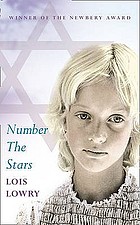
Number the starsSummary: Annemarie is a young girl living in Denmark during WWII, when the Nazis were occupying the country and were unjustly trying to get rid of all Jews.  Annemarie's best friend, Ellen, happens to be Jewish and is in danger of being "relocated" by Hitler's Nazi Party.  Annemarie's family takes a risk and decides to help Ellen and her family by keeping Ellen in their home and passing her as their daughter. 

Lowry, L. (1989). Number the stars. New York, NY: Dell Publishing.

My Impressions:  I love how this book is perfectly written for a younger audience and how the author manages to keep it both suspenseful and simple enough for young readers to understand the Holocaust.  This book gives just the right amount of exposure to what Jews went through during this extremely difficult time.  Even though it is fiction, it still provides the readers with plenty of true historical facts.  I love the bravery that Annemarie's character shows through out the story.  My favorite part is when Annemarie rips the Star of David of off Ellen's neck right before the Nazis enter their room and holds it so tight that it leaves an imprint on her hand.

Professional Review:
Gr 3-7 A moving and satisfying story of heroism in war time which is totally accessible to young readers. Annemarie’s life in occupied Copenhagen in 1943 seemingly is not much changed by the war – until the Nazi persecution of the Danish Jews begins. Annemarie’s family becomes involved in the Resistance effort helping a Jewish friend by having her pose as Annemarie’s dead sister Lise. When an important packet must be taken to the captain of one of the ships smuggling Jews to neutral Sweden, Annemarie finds the courage needed to deliver it despite grave danger in to herself. Later her Uncle Henrik tells her that brave means “not thinking about the dangers. Just thinking about what you must do.” Lowry’s story is not just of Annemarie; it is also of Denmark and the Danish people, whose Resistance was so effective in saving their Jews. Annemarie is not just a symbol, however. She is a very real child who is equally involved in playing with a new kitten and running races at school as in the dangers of the occupation. Number the Stars brings the war to a child’s level of understanding, suggesting but not detailing its horrors. It is well plotted and period and place are convincingly recreated. An afterword answers the questions that the readers will have and reiterates the inspirational idealism of the young people whose courage helped win the war.

[Review of Number the Stars, L.L. Sherman]. (1989). School Library Journal, 35(7), 177.
Library Use: This book can be utilize in numerous ways.  It would make a great introduction to the history of the Holocaust.  Teachers and librarians could used it to talk about WWII and explore the discrimination of Jews.  It could also be used to compare and contrast the lives of kids back in the 1940's and present day.

Saturday, February 4, 2012

Module 3 Noah's Ark


Image Detail
Summary: God is unhappy with how uncaring the human race has become so he decides he is going to wash away all the evil by creating a flood.  He chooses Noah as the designated person to build an ark that will protect his family and two of each animal. 

Pinkey, J. (2002). Noah's ark. New York, NY. SeaStar Books.

My Impressions: I was very pleased with how this book stayed true to the original biblical story. I was especially impressed with the beautiful watercolor paintings that earned this book a Caldecott in 2003. The illustration of the underwater view of the ark and the sharks swimming through buildings is breathtaking.

Professional Review:
Gr. 2-5. One of the best-known Old Testament stories gets a powerful traditional interpretation by an artist who seems utterly comfortable with the majesty of the tale, in terms of both meaning and visual scale. The deep rumble of a distant voice can almost be heard in the strong, straightforward text ("God was not pleased with the people of the earth. They did not care for one another. They did not care for the land that God made. And they did not care for God"), and the muscular pencil-and-watercolor art, in Pinkney's familiar style, stands up well to the telling. Scenes crowded with people and animals never seem too busy; and there's exciting drama in the rising water and the blowing winds. But the art is uneven, with a sameness to a few of the spreads, and sometimes the fascinating pencil underpinnings of the pictures are lost beneath the washes. Like the jacket art, however, there's much that is exceptional here, especially an impressive, quiet view of the ark sitting patiently as rain pounds the earth and the swirling sea begins to engulf the whole world. Definitely make room for this on the shelf.

[Review of Noah's Ark]. (2002, October 1). Booklist. Retrieved from www.booklist.com

Library Use: Since this story is of religious nature, the only library use it could serve would be as an example of illustrations that make a Caldecott winner.

Tuesday, January 31, 2012

Module 3 The Invention of Hugo Cabret


The invention of Hugo Cabret : a novel in words and pictures
Summary: Hugo is an orphan, an clock keeper, and an occasional thief, whose father died in a fire while repairing his invention.  He now works on clocks at a Paris train station. He collects his paychecks under his uncle's name who has also passed away.  He is especially fascinated by a mechanical human figure that he saved from the museum fire and that he keeps within the walls of the train station. He truly believes that if he fixes it, he will discover a hidden message from his deceased father.

Selznick, B. (2007).  The invention of Hugo Cabret. New York, NY: Scholastic Press. 

My Impressions:  At first, I was very intimidated by the size of this book and was pleasantly surprised on how much I thoroughly enjoyed it. Not only is it very well written, but the illustrations, which make up about half of the book, were a great addition to the flow of the story. The author does an excellent job in keeping the reader interested in Hugo's story and the intriguing plot. The story's final twist is a very nice touch and very unexpected.


Professional Review:
Gr 4-9 With characteristic intelligence, exquisite images, and a breathtaking design, Selznick shatters conventions related to the art of bookmaking in this magical mystery set in 1930s Paris. He employs wordless sequential pictures and distinct pages of text to let the cinematic story unfold, and the artwork, rendered in pencil and bordered in black, contains elements of a flip book, a graphic novel, and film. It opens with a small square depicting a full moon centered on a black spread. As readers flip the pages, the image grows and the moon recedes. A boy on the run slips through a grate to take refuge inside the walls of a train station-home for this orphaned, apprentice clock keeper. As Hugo seeks to accomplish his mission, his life intersects with a cantankerous toyshop owner and a feisty girl who won't be ignored. Each character possesses secrets and something of great value to the other. With deft foreshadowing, sensitively wrought characters, and heart-pounding suspense, the author engineers the elements of his complex plot: speeding trains, clocks, footsteps, dreams, and movies-especially those by Georges Méliès, the French pioneer of science-fiction cinema. Movie stills are cleverly interspersed. Selznick's art ranges from evocative, shadowy spreads of Parisian streets to penetrating character close-ups. Leaving much to ponder about loss, time, family, and the creative impulse, the book closes with a waning moon, a diminishing square, and informative credits. This is a masterful narrative that readers can literally manipulate.

[Review of The Invention of Hugo Cabret, by W. Lukehart]. (2007). School Library Journal, 53(3), 218-218. Retrieved from http://www.schoollibraryjournal.com

Library Uses: The book could lead into lessons about robots, movie making, or Paris. As a follow up activitty students could then illustrate their own movie or create their won robot.

Tuesday, January 24, 2012

Module 2 Green Egss and Ham

Summary: The story is about Sam and his numerous attempts to get his friend to try green eggs and ham.  Sam tries locations and scenarios to make the green eggs and ham more appealing, but his friend continues to refuse his offer, Until he finally gives in and to his surprise, he decides that he does indeed like green eggs and ham.

Seuss, T. (1960). Green eggs and ham. New York: Random House.

My Impressions: I'm a big Dr. Seuss fan, so this book is definitely one of my favorites.  I love the humorous illustrations and the rhyming repetition.  I like how it teaches not only kids but also adults that we need to try different things even if we think we won't enjoy them.  Reminds me of my sons' saying, "If you try it, you may like it."


Professional Review:
Would you like them anywhere? -- Well, try them before you finally refuse... Only Dr. Seuss could break down the resistance, and he does it with a contagious use of repeat words and phrases- and winds up with complete capitulation. Here's a tale with a moral- but done so engagingly and absurdly that the reluctant beginning reader may find himself hoist by his own petard. Try for yourself. Here's a book an adult will use -- that will be taken over by the young fry until the oldsters cry for mercy. Line and wash- three colors flat.

[Review of Green Eggs and Ham.] (2011, October)  Kirkus Reviews. Retrieved from http://www.kirkusreviews.com/book-reviews/childrens-books/dr-seuss-16/green-eggs-and-ham/

Library Use: Like most of Dr. Seuss books, this book has lots of rhyming and repetition.  Librarians and teachers could use this book to help with reading fluency for beginner or struggling readers. It would make a great read for Dr. Seuss week at school. 


Module 2 The Cat in the Hat


The cat in the hat

Summary: The story is about a brother and sister that are left home alone on a rainy day with nothing to do.  All of a sudden, a cat shows up at their house ready to have some fun.  Of course, all this fun leads so come chaos and creates a disaster that the kids must clean up before mom shows up.

Seuss, Dr. (1985). The cat in the hat. New York, NY: Random House.

My Impressions: I have always thought this book to be a great classic. It's a fun read with great illustrations that add to the story. I think that the cat gets to get away with a lot while the kids and Thing 1 and Thing 2 are left to clean up after his mess.


Professional Review:
CAT IN THE HAT TURNS 50! In celebration of 50 years of Dr. Seuss's The Cat in the Hat, Random House is releasing a pair of books to commemorate the occasion (see Children's Bookshelf, January 11). The Annotated Cat: Under the Hats of Seuss and His Cats by Philip Nell begins with the catalyst for Seuss's project, the article "Why Can't Johnny Read" in a 1954 Life magazine article. He then offers a brief biography of Theodor Seuss Geisel, before launching into a page-by-page analysis of The Cat in the Hat. Nel's commentary may center on one book, but along the way he offers a broader context of children's book publishing and education in the 1950s. The paper-over-board The Cat in the Hat Party Edition by Dr. Seuss features a glistening metallic blue cover and an opportunity for readers to participate in a campaign for literacy with First Book, as well as Project 236 (so named for the 236 words in the text of Cat), which culminates with the national read-aloud day on March 2, sponsored by the NEA's Read Across America. (Random, $30 192p ages 10-up ISBN 978-0-375-83369-4; Party Ed. $8.99 72p ages 5-8 ISBN 978-0-394-80001-1; Jan.) Copyright 2007 Reed Business Information.

[Review of Cat in the Hat]. (2007, January 22). Publisher's Weekly. Retrieved from www.publishersweekly.com

Library Use: This book could be used to help readers identify and use rhyming words.  It would also help struggling readers build their vocabulary.  This book could lend itself to numerous writing prompts for both beginning and intermediate readers.

Tuesday, January 17, 2012

Module 1 The Giving Tree

Summary:The story is about the love between a tree and a boy that continuously takes and takes from the tree until one day the tree has nothing more to give. The boy returns once he is an old man and he is reunited with the tree.

Silverstein, S. (1964). The giving tree.  New York, NY: Harper and Row.

My Impressions:
The Giving Tree is definitely a thought provoking story.  I initially thought that the story taught a good lesson on generosity and unconditional love. On the other hand, after giving it more thought, the story also seems to teach the selfishness of mankind and how we continuously take away from nature.

Professional Review:
"Look Shel," I said, "the trouble with this ‘Giving Tree' of yours is that it falls between two stools; it's not a kid's book -- too sad, and it isn't for adults -- too simple." This was in 1963; I was working at Simon & Schuster; Shel was Shel Silverstein, and the manuscript was "The Giving Tree," which Harper & Row subsequently published, and which has sold over 150,000 copies. Kurt Vonnegut must have some kind of philosophical saying for the way I feel now.

Shel Silverstein first came to prominence as Playboy's roving cartoonist. He published a number of children's books and the outrageous "Uncle Shelby's ABZ Book," and just a few years ago turned up as a song-writer with Johnny Cash's hit "A Boy Named Sue." Even more recently, he had a hit, singing in his own raucous voice his "Freakin' at the Freaker's Ball," and we'll soon see in November a large collection of his poems for children, "Where the Sidewalk Ends."

When I called this paper and said I'd like to do a piece about "The Giving Tree," they said, fine, but would I also look into two other surprise sellers, "The Velveteen Rabbit," and "Go Ask Alice"? Very good.

"The Giving Tree" begins, "Once there was a tree..." (Dots are Shel's) and goes on for 50 more pages with a simple tale, illustrated in graceful cartoon style by the author. There was a boy who played in the tree, gathering its leaves, swinging on its branches, eating its apples. When the boy grew older he lay in the shade of the tree with a girl and carved initials in a heart. Yet older, a young man, he took the tree's branches to build a house. As an old man he needed a boat to get away from it all, so the tree said cut me down and make a boat. So we have a stump. Along comes the boy, now an old, old man, and the ex-tree says, "Come, Boy, sit down. Sit down and rest." And the tree was happy.

My interpretation is that that was one dum-dum of a tree, giving everything and getting nothing in return. Once beyond boyhood, the boy is unpleasant and ungrateful, and I wouldn't give him the time of day, much less my bole. But there's a public out there who think otherwise, and Harper & Row expects to sell another 100,000 this year. And this month they are bringing out a version in French, "L'arbre au Grand Coeur." I called Ursula Nordstrom, who has been Shel's editor at Harper & Row, and asked how this all came about. Ursula, noted for finding and encouraging such artists as Maurice Sendak and Tomi Ungerer, had long ago noted Shel's "simple and direct drawings" in Playboy, and tried to get him to do a book. Shel, the hardest man in the world to pin down, didn't react until Tomi Ungerer said, "Go see Ursula." There was tremendous disagreement in the office over "The Giving Tree," one editor saying "That tree is sick! Neurotic!" They did a small first printing in 1964. Nothing much happened. Then, as Ursula says, "The body twitched". Apparently, it had been taken up by the great word-of-mouth underground with an assist from the pulpits; where it was hailed as a parable on the joys of giving, and from Shel's disk-jockey friends, a strange pairing. The book, to me, is simply a backup of "more blessed to give than to receive." My wife's interpretation, not surprisingly, is that the tree represents a mother, giving and receiving with not expectation of return. Whatever it is, it touches a sensitive point clearly and swiftly, as do other recent phenomena of Segals and seagulls.

Cole, W. (1973, September 9)). About Alice, a rabbit, a tree...

[Review of the book The Giving Tree]. (1973, September 9). New York Times Book Reviews.  Retrieved from http://shelsilverstein.tripod.com/Books/NYTBR-GT.html


Library Use: Librarians and teachers could use this book in the spring semester as a nice way to talk about Mother's Day or Earth Day and have discussions on how unconditional a parent's love is or how good mother Earth is to human beings.  Then have students use their letter writing strategies to write a letter of appreciation to a loved one who has made sacrifices for them.